

 Copied link to Clipboard!
Spring cleaning usually starts as a “clear out the closets” kind of weekend. But once you stack up toys, books, and sports gear your family no longer uses, you’ve also got something else: a hands-on money lesson. A yard sale turns “stuff we’re done with” into a mini marketplace where kids can see how decisions, effort, and price connect.
 Lesson Notes:
Fortunately, kids don’t need a formal class to learn money habits. Everyday routines make money feel normal rather than stressful and help you layer financial lessons for kids over time, in small pieces. The Money Advice Service report on early habit formation puts it plainly: “situations need to be constructed so that the child experiences the process or idea rather than just being told about it” (Whitebread & Bingham, 2013, p. 21). Real-world activities like planning or counting are practical ways to build money skills for children with less pushback.
A typical yard sale is a crash course in how money moves. In the process, kids learn that prices are choices, not rules. They learn that buyers compare options, ask questions, consider tradeoffs, and sometimes walk away.
Earning money through effort
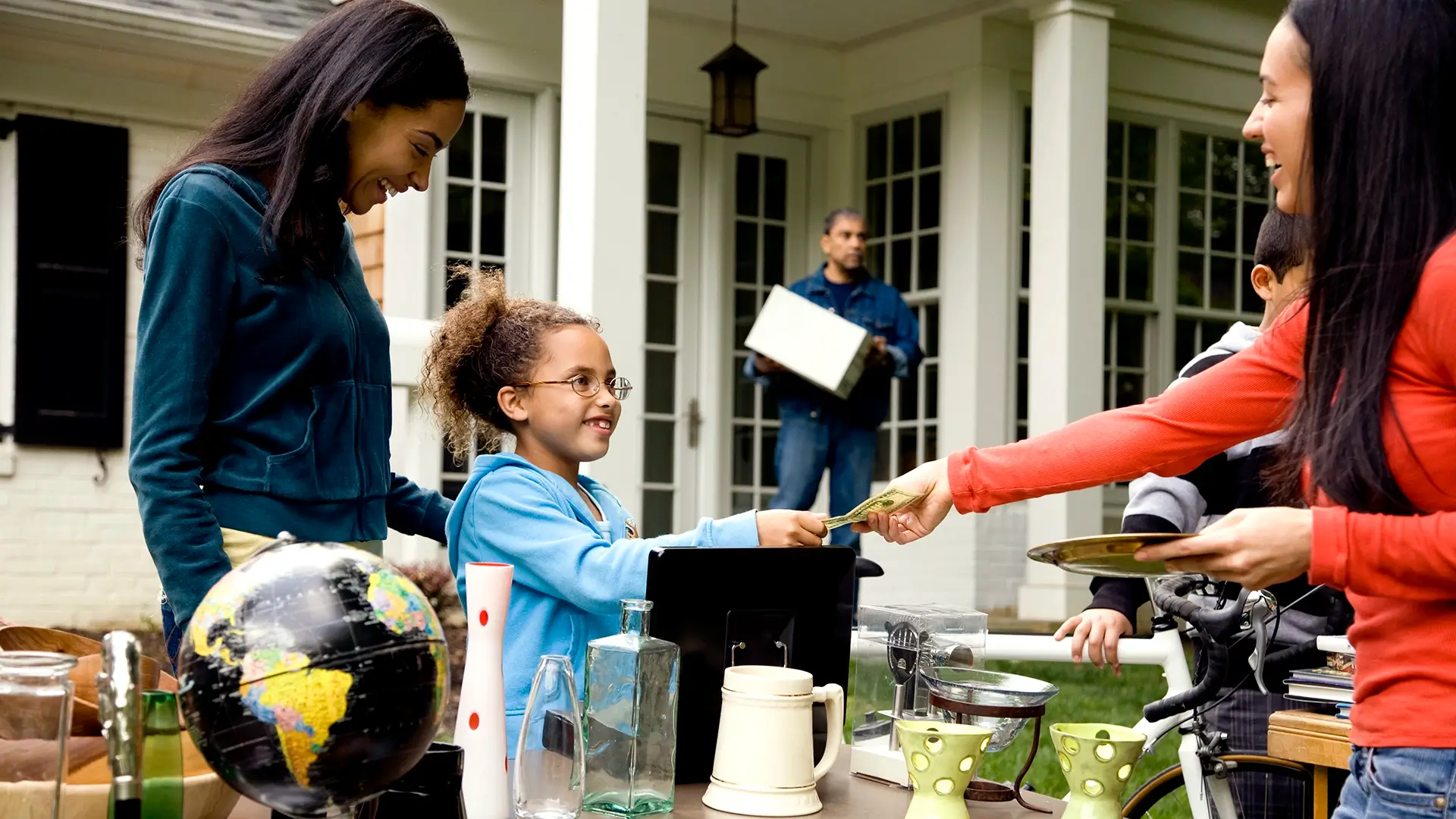
When you participate in a yard sale, kids watch and participate in the full chain. They organize items, help customers, and earn money when items sell. These processes reinforce kids and money basics lessons like earning before spending.
Understanding value and pricing
Pricing teaches that value depends on condition, demand, and what someone will actually pay. Help your kids compare similar items and ask, “What would you choose if you were buying?” If something doesn’t sell, talk about what one small price change might do.
Making choices and trade-offs
Selling means giving up one thing to gain another. Kids experience that trade-off in real time during a yard sale. Then, after the sale, ask whether to keep the money or use it toward a goal to reinforce kids and money basics lessons. Ultimately, most students report that parents are their primary source of financial information (OECD, 2020), so your guidance on yard sales is part of their money lessons.
Kids learn more when they feel ownership, not when they’re assigned a money lesson. Thus, aim for shared decisions on what to sell, how to price it, and who does what job. Keep the tone light so the day still feels like a family project.
Younger kids can sort items and place stickers, while older kids can help track sales or make signs. To encourage participation, give choices to your kids. They can choose to price items, greet customers, or tally totals afterward, whichever suits their comfort level.
Choosing items to sell
Let your kids pick a set of items they’re truly ready to part with, so the lesson doesn’t feel forced. As you sort, talk briefly about needs versus wants and what they actually use. Offer a simple keep or sell option for young kids. On the other hand, for older kids, ask for the reason behind each choice.
Pricing items together
When teaching pricing, start with simple comparisons such as similar items. Then, show how different conditions in items lead to different prices. For older kids, you can role-play polite price negotiation, one of the most useful money skills for children, as they grow older.
Selling, making change, and tracking money
If your child is old enough to handle cash, let them run a small cash box with your supervision. Also, let them practice making change, which is an instant lesson in counting and double-checking work. A simple record of what sold and at what price reinforces financial lessons for kids and shows how totals grow.
When the yard sale is over, the earning part concludes. The next money skills lesson for kids is equally important: What do you do with the money? A short plan helps kids see that money is a tool, not just a reward.
Saving vs. spending vs. giving
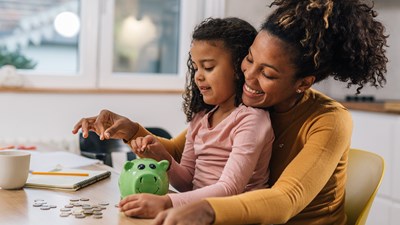
Using amounts that fit your family, try a simple three-bucket plan: save, spend, and give. For example, an equal split among the three helps kids see that money has more than one job. If your child is ready for more structure, a kids checking account can make saving and spending feel more real.
Setting short-term goals
Pick one clear goal so the money has a purpose. The goal should be something small, specific, motivating, and relatable to your kid. For older kids, a goal with a specific target amount works well, especially if you open a teen bank account, which helps them practice tracking progress.
Reinforcing intentional choices
Help your child choose one repeatable habit, such as waiting before buying or tracking spending, to build consistent and mindful money habits.
A quick recap makes the experience feel complete and sets up the next lesson.
Reflect on what worked and what didn’t
What sold fast? What didn’t? What would you do differently next time? These questions emphasize learning from results rather than always getting it right. It’s an easy way to reinforce money basics with kids after the excitement ends.
Connect the experience to everyday spending decisions
Use the yard sale as a reference point: “Is this worth giving up something else?” Those quick questions train kids to notice trade-offs in daily life. You’re building the habit of pausing before spending.
Encourage continued money conversations
After the yard sale, continue the money conversations. A weekly check-in builds money skills for children over time and keeps them alive long after the driveway is empty.
What age is appropriate to teach kids about money?
By around age 7, children begin to understand money concepts. Start early with simple choices, counting, and waiting before making a purchase. As kids grow older, add budgeting, savings goals, and explanations of how accounts work.
How do I explain pricing to young children?
Use side-by-side comparisons and simple questions such as “Which looks newer?” and “Which would you buy?” Keep numbers small and focus on the value of items. For instance, explain that since items are not new, they might have less value.
Should kids keep the money they earn from a yard sale?
Many families split it so kids save some and give away or contribute the rest to a goal. The split matters less than explaining why saving or giving matters.
What if my child doesn’t want to sell their items?
Respect the decision and offer options. They can still sell family items, help set prices, or track totals. Kids can still learn without giving up things they aren’t ready to part with.
Whitebread, D., & Bingham, S. (2013, May). Habit formation and learning in young children. Money Advice Service. https://maps.org.uk/content/dam/maps-corporate/en/our-work/mas-habit-formation-and-learning-in-young-children-may-2013.pdf
Organisation for Economic Co-operation and Development. (2020, May). PISA in Focus No. 106: PISA 2018 results: Are students smart about money? https://www.oecd.org/content/dam/oecd/en/publications/reports/2020/05/pisa-2018-results-are-students-smart-about-money_33989ca7/d540d9e9-en.pdf
*PLEASE NOTE: This article is intended to be used for informational purposes only and should not be considered financial advice. Please consult your own financial advisor, accountant or other financial professional to learn more about what strategies are appropriate for your situation.